ToffanoMirko.blogspot.it - cordiais boas-vindas - радушный прием - isang taos-puso maligayang pagdating - a hearty welcome - un accueil chaleureux - herzlich willkommen - una calurosa bienvenida -

mercoledì 4 aprile 2012

I GRANDI DEL CICLISMO : FAUSTO COPPI


Angelo Fausto Coppi (Castellania, Alessandria 15 settembre 1919 – Tortona, 2 gennaio 1960) ciclista su strada e pistard.Soprannominato il Campionissimo o l'Airone, fu il corridore più vincente e famoso dell'epoca d'oro del ciclismo, ed è considerato uno dei più grandi e popolari atleti di tutti i tempi.Eccellente passista e scalatore, e buon velocista, era un corridore completo e adatto ad ogni tipo di competizione su strada. Si impose sia nelle più importanti corse a tappe sia nelle maggiori classiche di un giorno. Fu anche un campione di ciclismo su pista.Professionista dal 1939 al 1959, vinse cinque volte il Giro d'Italia (1940, 1947, 1949, 1952 e 1953) (record), e due volte il Tour de France (1949 e 1952). Fra i suoi numerosi successi nelle corse in linea vanno ricordate le cinque affermazioni al Giro di Lombardia (1946, 1947, 1948, 1949 e 1954) (record), le tre vittorie alla Milano-Sanremo (1946, 1948 e 1949), e i successi alla Parigi-Roubaix e alla Freccia Vallone nel 1950. Fu Campione del mondo nel 1953. Nel ciclismo su pista, fu Campione del mondo d'inseguimento nel '47 e nel '49 e primatista dell'ora (45,798 km) dal 1942 al 1956.Leggendaria la sua rivalità con Gino Bartali, che divise l'Italia nell'immediato dopoguerra (anche per le presunte diverse posizioni politiche dei due). Celebre nell'immortalare un'intera epoca sportiva - tanto da entrare nell'immaginario collettivo degli italiani - è la foto che ritrae i due campioni mentre si passano una bottiglietta durante una salita al Tour del '52.Le sue imprese e le tragiche circostanze della morte ne hanno fatto un'icona della storia sportiva italiana. A oltre cinquant'anni dalla scomparsa, la sua popolarità e fama appaiono immutate.Fausto Coppi nasce a Castellania, in provincia di Alessandria, il 15 settembre 1919 figlio di Domenico Coppi e di Angiolina Boveri. Incomincia a lavorare a Novi Ligure come garzone in una salumeria, ed è a Novi che incontra Biagio Cavanna, il famoso massaggiatore cieco e 'santone' del ciclismo, che tanta parte avrà nella sua trionfale carriera. Fausto disputa la sua prima gara nel luglio del 1937, sul circuito della Boffalora (Castellania (Boffalora)-Sarezzano-Tortona-Villalvernia-Castellania), e nell'estate dell'anno successivo centra la sua prima vittoria, a Castelletto d'Orba.Nel 1939 partecipa ad una corsa a Pavia; in quell'occasione Cavanna scrive a Giovanni Rossignoli della Bianchi raccomandandogli due nomi: "Caro Giovanni, ti mando due corridori. Uno, il Coppi, vincerà; l'altro farà quel che potrà". Coppi come previsto da Cavanna vince, e all'inizio della stagione seguente passa al professionismo, diventando gregario di Gino Bartali alla Legnano.Nel 1940, all'esordio al Giro d'Italia, Coppi dovrebbe limitarsi ad aiutare il suo capitano Bartali, il quale però cade durante le prime tappe ed appare fuori gioco per la vittoria finale. Fausto ha così via libera e s'impone di forza nella tappa Firenze-Modena tra lo stupore generale: un'incredibile fuga, iniziata sull'Abetone sotto il diluvio e conclusa in modo trionfale. Conquista la maglia rosa e la difende sino a Milano, risultando così il più giovane vincitore del Giro, conquistato a soli vent'anni.Due anni dopo al velodromo Vigorelli stabilisce il nuovo record dell'ora. L'impresa è compiuta in un clima surreale: il pericolo di bombardamenti spinge gli organizzatori a comunicare un orario falso per evitare assembramenti, e gli spalti rimangono quindi semivuoti. Ma la guerra tarpa le ali al giovane campione: mandato in Africa con la fanteria (Divisione Ravenna) è fatto prigioniero dagli inglesi. Al seguito delle truppe britanniche, come attendente di un capitano, rientra in Italia nel 1945 e viene tesserato dalla Sezione Ciclismo della S.S. Lazio, con la quale corre alcune gare, aggiudicandosi anche alcuni trofei.Nel 1946 nasce il leggendario binomio "Fausto Coppi-Bianchi", Fausto indosserà per un decennio la famosa casacca bianco-celeste, la maglia di tutte le sue più celebrate imprese. L'arrivo alla Bianchi dà immediatamente i suoi frutti: vince la sua prima Milano-Sanremo con un'epica fuga e ben 14 minuti di vantaggio sul secondo classificato (la radio annuncia: "Primo classificato Coppi Fausto; in attesa del secondo classificato trasmettiamo musica da ballo"); quindi si aggiudica tre tappe al Giro (vinto da Bartali), il Grand Prix des Nations (bissato l'anno successivo), il Circuito di Lugano e nel finale di stagione il suo primo Giro di Lombardia.Nel 1947, a sette anni di distanza dal primo successo, vince nuovamente il Giro d'Italia. Fra i suoi compagni di squadra vi è il fratello Serse, cresciuto ciclisticamente con lui e al quale Fausto è molto legato. Serse vincerà la Parigi-Roubaix del 1949 per poi morire in circostanze tragiche nel 1951, in seguito ad una caduta durante la volata finale al Giro del Piemonte.Nel 1948 Fausto centra la seconda accoppiata Sanremo-Lombardia.Il 1949 è l'anno della definitiva consacrazione internazionale. Fausto vince ancora una volta la Sanremo e il Lombardia, e al Giro firma quella che resterà la sua impresa più celebre, con 192 chilometri di fuga nella tappa Cuneo-Pinerolo: dopo Maddalena, Vars, Izoard, Monginevro e Colle del Sestriere arriva con quasi 12 minuti sul secondo (Bartali). Il giornalista Mario Ferretti apre la sua radiocronaca con una frase entrata nella storia del ciclismo: "Un uomo solo è al comando; la sua maglia è bianco-celeste; il suo nome è Fausto Coppi". Conquistato il terzo Giro, affronta il suo primo Tour de France: nessun corridore è mai riuscito a centrare la doppietta Giro-Tour nello stesso anno. Fausto parte molto male, perdendo più di mezz'ora nelle prime tappe. Poi come d'incanto risorge, dominando le due lunghissime cronometro e staccando tutti alla sua maniera nella tappa Briançon-Aosta. È il trionfo definitivo, e in Francia nasce il mito di "Fostò". Al Mondiale di Copenaghen, su un tracciato adatto a velocisti puri, si piazza terzo dopo il principe delle volate Van Steenbergen e lo svizzero Kübler.
Il 1950 inizia in maniera sfolgorante, con i successi alla Parigi-Roubaix e alla Freccia Vallone. Ma la sfortuna colpisce Coppi forse nel momento migliore della carriera: alla nona tappa del Giro, la Vicenza-Bolzano, un corridore che gli è davanti sbanda e Fausto cade; all'ospedale di Trento la diagnosi è senza appello: frattura tripla del bacino, e stagione finita.Il destino si accanisce poi nel 1951 con la scomparsa del fratello Serse, tragedia che segna Fausto nel profondo. Dopo un discreto Giro, terminato con due vittorie di tappa, partecipa al Tour con la morte nel cuore. Nella tappa di Montpellier attraversa una crisi spaventosa, da cui riesce a risollevarsi solo grazie all'aiuto dei fedeli compagni di squadra. Si riprende nel finale del Tour, dimostrando a tutti di essere ancora lui e conquistando la tappa alpina da Gap a Briançon.Nel 1952, lasciata la cattiva sorte alle spalle e nel pieno della sua maturità agonistica, Fausto mette il sigillo su un'altra fenomenale annata, riuscendo a ripetere la doppietta del 1949: vince tre tappe e classifica finale al Giro d'Italia, e addirittura cinque tappe al Tour (fra le quali il primo arrivo a L'Alpe d'Huez nella storia della Grande Boucle), portando nuovamente la maglia gialla sino a Parigi. Sul Colle del Galibier viene scattata la foto di un'epoca. Carlo Martini immortala Coppi davanti, Bartali dietro e una borraccia in mezzo.Il 1953 è l'anno della quinta vittoria al Giro (sulle rampe dello Stelvio stacca Hugo Koblet, ultima leggendaria impresa del Campionissimo alla Corsa Rosa) ma è soprattutto l'anno del trionfo al Campionato del Mondo: sul difficile circuito di Lugano Coppi fa letteralmente il vuoto; il belga Germain Derycke tenta di rimanergli a ruota, ma a 30 km dall'arrivo l'Airone di Castellania prende il volo e giunge sul traguardo con 6 minuti di vantaggio. La vittoria di Lugano segna il punto più alto della sua carriera, ma è anche l'inizio della parabola discendente.Nel 1954 l'ultima grande vittoria: il Giro di Lombardia, per la quinta volta (record assoluto di successi nella grande classica di ottobre).Nel 1955 appare di nuovo in ottima forma: vince il suo quarto Campionato italiano su strada, si piazza secondo nel Giro (la vittoria va a Fiorenzo Magni per soli 13 secondi) e nella Parigi-Roubaix, e coglie la sua ultima affermazione in una corsa in linea, al Giro dell'Appennino. Nel 1957, con la maglia della Carpano-Coppi, l'ultimo trionfo in assoluto, al Trofeo Baracchi, a cronometro in coppia con Ercole Baldini. Nel 1959 nasce il progetto della "San Pellegrino": una nuova formazione diretta da Gino Bartali, che dovrebbe avere come capitano proprio Fausto. I due grandi rivali sotto la stessa bandiera, come vent'anni prima.Coppi vinse complessivamente 122 corse in carriera. Indossò per 31 giorni la maglia rosa e per 19 giorni la maglia gialla.Dal fisico apparentemente poco atletico, Coppi era dotato di una notevole agilità muscolare e di un sistema cardiorespiratorio fuori dal comune (capacità polmonare di oltre 7 litri e 32 pulsazioni cardiache/minuto a riposo), qualità che ne esaltavano la resistenza sotto sforzo. La struttura ossea molto fragile e le ripetute fratture lo costrinsero tuttavia a pause forzate durante l'intero arco d'attività. Allo stesso modo, la seconda guerra mondiale ne condizionò la carriera: la sospensione delle competizioni a causa del conflitto giunse infatti subito dopo le sue prime importanti vittorie.Nel dicembre del 1959, subito dopo essere stato ingaggiato dalla squadra appena costituita dall'amico ed ex-rivale Gino Bartali, Coppi partecipa con alcuni amici ciclisti francesi - fra cui Raphaël Géminiani e Jacques Anquetil - a una corsa nell'Alto Volta, attuale Burkina Faso, in occasione dei festeggiamenti per l'indipendenza del Paese. Nei giorni successivi prende parte a una battuta di caccia nella boscaglia attorno a Ouagadougou, dove contrae la malaria.Al ritorno in Italia, pochi giorni prima di Natale, è febbricitante. Il 29 dicembre è assalito da febbre altissima, nausea e brividi. Nel pomeriggio del 1º gennaio le condizioni del campione si aggravano ulteriormente; il medico curante, dott. Allegri, chiama a consulto il primario dell'ospedale di Tortona, professor Astaldi, il quale decide per un immediato ricovero in ospedale. A Tortona giunge per un altro consulto il professor Fieschi, dell'Università di Genova. All'ammalato è praticata una cura intensa a base di antibiotici e cortisonici, ma Coppi non reagisce ed entra in coma. Non riprende più conoscenza e muore alle 8.45 del 2 gennaio 1960, a poco più di quarant'anni. I medici avevano sbagliato diagnosi, ritenendo Coppi affetto da un'influenza più grave del consueto (nonostante la moglie e il fratello di Géminiani avessero telefonato dalla Francia per avvertire che a Raphaël era stata diagnosticata la malaria).Coppi viene sepolto nel cimitero del suo paese natale. Al funerale partecipano decine di migliaia di persone e tutto il mondo del ciclismo.


Angelo Fausto Coppi (Castellania, Alessandria September 15, 1919 - Tortona, January 2, 1960) road cyclist and the pistard.Soprannominato Campionissimo or Heron, was the most successful and famous rider of the golden age of cycling, and is considered one of the largest and most popular athletes of all tempi.Eccellente long distance cyclist and climber and good runner, a runner was complete and suited to every type of road racing. It is imposed in the most important stage races in both the more classic than a day. He was also a champion cyclist of pista.Professionista 1939 to 1959, he won five times in the Tour of Italy (1940, 1947, 1949, 1952 and 1953) (records), and two times the Tour de France (1949 and 1952) . Among its many successes in racing line should remember the five statements in the Giro di Lombardia (1946, 1947, 1948, 1949 and 1954) (record), the three victories at Milan-San Remo (1946, 1948 and 1949), and successes Paris-Roubaix and Fleche Wallonne in 1950. He was world champion in 1953. In track cycling, was World Champion in tracking and record-holder in '49 and '47 hour (45.798 kilometers) from 1942 to 1956.Leggendaria his rivalry with Gino Bartali, which divided Italy after the war (even for supposedly different political positions of the two). Famous sports nell'immortalare entire era - so as to enter the Italian collective consciousness - is the photo that depicts the two samples while passing a bottle during a climb in the Tour of '52. His exploits and tragic circumstances of death made it an icon of Italian sports history. More than fifty years after his death, his popularity and fame appear immutate.Fausto Castellania Coppi was born in the province of Alessandria, September 15, 1919 the son of Domenico Coppi and Angiolina Boveri. Began working as an apprentice in Novi Ligure in a delicatessen, and he meets in Novi Biagio Cavanna, the famous blind masseur and 'guru' of cycling, which has so much in his triumphant career. Fausto dispute his first race in July 1937, the circuit of Boffalora (Castellania (Boffalora)-Sarezzano-Tortona Villalvernia-Castellania), and in the summer of the following centers his first win in Castelletto d'Orba. In 1939 participates in a run in Pavia on that occasion Cavanna wrote to John White of Rossignoli recommending two names: "Dear John, I am sending two runners. A, Coppi, will win, the other will do what he can." Coppi won as expected by Cavanna, and early the following season passes to professionalism, becoming wingman to Gino Bartali Legnano.Nel 1940, debut at the Tour of Italy, Coppi should be limited to helping his captain Bartali, which however, falls during the early stages and is out of play for the win. Fausto has so go ahead and imposes strong step in the Firenze-Modena general amazement: an incredible escape the downpour started sull'Abetone and concluded triumphantly. Conquer the pink jersey and defends it to Milan, making it the youngest winner of the Tour, won just two decades. Two years after the Vigorelli velodrome sets new hour record. The work was completed in a surreal atmosphere: the danger of bombing pushes the organization to communicate a false time to avoid crowds, and the stands are half empty then. But the war clip the wings of the young champion: sent to Africa with the infantry (Ravenna Division) is taken prisoner by the British. Follow-up of British troops, as steward of a captain, he returned to Italy in 1945 and is rationed by the Cycling section of the SS Lazio, which runs some races, winning some trofei.Nel 1946 founded the legendary duo "Fausto Coppi-Bianchi," Fausto wear for a decade, the famous blue and white jacket, the shirt of all his most celebrated companies. The arrival of the whites he immediately paid off: he won his first Milan-San Remo with an epic flight, well 14 minutes ahead of second place (the radio announces: "For the winner Fausto Coppi, waiting for the runner-send music dance "), then won three stages in the Tour (won by Bartali), the Grand Prix des Nations (repeated the following year), the Circuit of Lugano and in the final season of his first Giro Lombardia.Nel 1947, Seven years after the first success, he won the Tour of Italy again. Among his teammates is his brother Xerxes, ciclisticamente grew up with him and to whom Faust is very close. Xerxes will win Paris-Roubaix in 1949 only to die in tragic circumstances in 1951, following a fall during the final sprint of the Tour 1948 Fausto Piemonte.Nel centers the second coupled Lombardia.Il-Sanremo 1949 is the year of final international recognition. Fausto won once again the town, and the Lombardia, Giro and the signature that will remain his most famous, with 192 km of flight in the Cuneo-Pinerolo stage: after Maddalena, Vars, Izoard, Montgenevre and Sestriere pass comes with almost 12 minutes on the second (Bartali). The journalist Mario Ferretti opens his commentary with a phrase into the history of cycling: "One man is in command, his shirt is blue and white, his name is Fausto Coppi." Won the third tour, he faces his first Tour de France: no rider has ever managed to hit the double Giro-Tour in the same year. Fausto hand very badly, losing more than half an hour in the early stages. Then rises again as if by magic, dominating the two long time trials and removing all his own way in the stage Briancon-Aosta. It is the ultimate triumph, and France was born the myth of "Fostò". At the World Cup in Copenhagen, on a path suitable for pure sprinters, is placed third after the Prince of sprints Van Steenbergen and the Swiss Kubler. The 1950 starts in a dazzling, with wins at Paris-Roubaix and Fleche Wallonne. But bad luck strikes Coppi perhaps the best moment of his career: the ninth stage of the Giro, the Vicenza-Bolzano, a runner that is ahead of Fausto swerves and falls; Trento hospital in the diagnosis is final: triple fracture of the pelvis, finita.Il season and fate rages again in 1951 with the disappearance of his brother Xerxes, in the deep tragedy that marks Fausto. After a decent tour, ending with two stage wins, takes part in the Tour with a heavy heart. At the stage of Montpellier through a terrible crisis, which can recover only with the help of loyal teammates. It resumes at the end of the tour, showing everyone that he and still winning the mountain stage from Gap to Briançon.Nel 1952, left the bad luck behind him and in his full maturity, agonistic, Fausto puts the seal on another phenomenal year, managing to repeat the double of 1949: he won three stages and the final standings in the Tour of Italy, and even five stages in the Tour (including the first arrival in L'Alpe d'Huez in the history of the Grande Boucle), bringing again until the yellow jersey in Paris. Col du Galibier on the picture is taken of an era. Carlo Martini Coppi immortalized in front, behind and Bartali mezzo.Il a water bottle in the year 1953 was the fifth victory in the Tour (on the off ramp of the Stelvio Hugo Koblet, last of the legendary company Campionissimo the Corsa Rosa) but it's the year of triumph at the World Championship: the difficult circuit Coppi Lugano is literally empty, the Belgian Germain Derycke try to stay with a wheel, but at 30 km to the Castellania Heron takes flight and arrive at the finish line with 6 minutes advantage. Lugano's victory marks the highest point of his career, but also the beginning of the parable discendente.Nel 1954 the last great victory: the Giro di Lombardia, for the fifth time (absolute record of success in the great classic of October ). In 1955 he appears again in top form: he won his fourth Italian Cup on the road, finished second in the Tour (the victory goes to Fiorenzo Magni, for 13 seconds) and Paris-Roubaix, and seizes his last statement in a road race, the Tour of the Apennines. In 1957, with the shirt-Carpano Coppi, the ultimate triumph of all, the Trofeo Baracchi, time trials in pairs with Ercole Baldini. In 1959 the project was born of the "San Pellegrino": a new training directed by Gino Bartali, which should have as its Captain Fausto. The two great rivals under the same flag, as a twenty prima.Coppi won a total of 122 races in his career. She wore the pink jersey for 31 days and 19 days the shirt gialla.Dal physical seemingly little athletic, Coppi was equipped with an agile and muscle of a cardiorespiratory system out of the ordinary (lung capacity of more than 7 liters and 32 heart beats / minute at rest), who praised the quality of resistance during exercise. The bone structure very fragile and repeated fractures, however, forced him to pause enforced throughout the entire activity. Similarly, World War II it influenced his career: the suspension of racing due to the conflict it came right after his first major vittorie.Nel December 1959, shortly after being hired by the newly established by his friend and former team -rival Gino Bartali, Coppi French cyclists involved with some friends - including Raphael Geminiani and Jacques Anquetil - in a race in Upper Volta, now Burkina Faso, on the occasion of the celebrations for the country's independence. In the days after taking part in a hunt around in the bushes in Ouagadougou, where he contracted the malaria.Al return to Italy, a few days before Christmas, is infuriated. On December 29, is attacked by high fever, nausea and chills. On the afternoon of January 1 of the sample conditions worsen further, the doctor, dr. Allegri, called to consult the primary hospital of Tortona, Professor Astaldi, which decides for immediate hospitalization. At Tortona come for another consultation Fieschi Professor, University of Genoa. The sick is practiced intensive care with antibiotics and cortisone, but does not react Coppi and falls into a coma. No longer uses the knowledge and dies at 8:45 am on January 2, 1960, just over forty years. The doctors were wrong diagnosis, believing Coppi suffering from more serious influence than usual (although his wife and brother Geminiani had phoned from France to warn that Raphael had been diagnosed with malaria). Coppi is buried in the cemetery of his country Christmas. At the funeral involved tens of thousands of people and the world of cycling.


martedì 3 aprile 2012

LE GRANDI CORSE A TAPPE : TOUR DE FRANCE

Il Tour de France è uno dei tre grandi giri di ciclismo su strada ed uno tra i più importanti avvenimenti sportivi del mondo. A partire dal 1903 la corsa si è svolta ogni anno, ad eccezione dei periodi della prima e della seconda guerra mondiale, durante tre settimane nel mese di luglio, su un percorso ogni volta diverso attraverso la Francia ed i paesi confinanti. Le radici del Tour de France possono essere ricondotte all'Affare Dreyfus, uno scandalo politico che divise la Francia per molti anni sul finire del XIX secolo riguardo l'innocenza di Alfred Dreyfus, un ufficiale accusato di aver venduto segreti militari alla Germania. Il primo Tour fu organizzato su cinque tappe, dal 31 maggio al 5 luglio, con partenza e arrivo a Parigi e tappe intermedie a Lione, Marsiglia, Bordeaux e Nantes. Tolosa fu aggiunta in seguito per interrompere la lunga traversata del sud della Francia, dal Mar Mediterraneo all'Oceano Atlantico. Le tappe iniziavano durante la notte e terminavano il pomeriggio successivo, con giorni di riposo per permettere ai ciclisti di recuperare le energie. La durezza della corsa ed i costi elevati per molti, portarono a sole 15 iscrizioni. Il primo Tour de France partì all'esterno del Café Reveil-Matin all'incrocio tra le vie Melun e Corbeil nel villaggio di Montgeron. Il via fu dato dallo starter Georges Abran alle 3:16 p.m. il 1º luglio 1903. Tra i corridori c'erano il futuro vincitore, Maurice Garin, il suo rivale Hippolyte Aucouturier, il favorito tedesco Josef Fischer, e molti avventurieri tra i quali uno partecipò come "Samson". La corsa finì alla periferia di Parigi, a Ville d'Avray, all'esterno del "Restaurant du Père Auto", prima di un corsa cerimoniale a Parigi e diversi giri del Parco dei Principi. Garin dominò la gara, vincendo la prima e le ultime due tappe, ad una media di 25.68 km/h. L'ultimo classificato, Arsène Millocheau, terminò a 64.57'08" da lui. La corsa catturò l'attenzione del pubblico. Le vendite del principale quotidiano sportivo  (L'Auto) salirono da 25.000 a 65.000; nel 1908 furono 250.000 e durante il Tour del 1923 500.000. Il record fu di 854.000 durante il Tour del 1933. Il primo Tour fu aperto a chiunque volesse parteciparvi. Molti corridori facevano parte di squadre, mentre i partecipanti singoli venivano chiamati “touriste-routiers” - turisti della strada - e fu permesso loro di parteciparvi anche senza fare domanda agli organizzatori. Alcuni dei più rappresentativi partecipanti al Tour erano "touriste-routiers". Uno di essi ogni giorno, dopo aver terminato la tappa, offriva esibizioni acrobatiche nelle strade per guadagnare i soldi per l'hotel. Non ci fu più posto per i partecipanti individuali nei Tour dopo il 1930, così si crearono delle squadre regionali, generalmente provenienti dalla Francia, che permettevano di partecipare ai corridori che non avevano altri metodi per qualificarsi. Molti dei "touriste-routiers" non parteciparono più, ma alcuni furono inclusi nelle squadre regionali. Il primo organizzatore fu Henri Desgrange, anche se fu Lefèvre a seguire la corsa nel 1903, in moto e treno. Sono i francesi, con 36 vittorie, ad essersi aggiudicati il Tour per più volte. Segue il Belgio con 18, poi distanziate Spagna (13), USA (10), Italia (9), Lussemburgo (4) poi Svizzera e Paesi Bassi (2) e per finire Germania, Irlanda, Australia e Danimarca (1). Il dominio franco-belga però non rispecchia la situazione attuale. L'ultima vittoria di un ciclista di una di queste due nazioni risale a oltre venti anni fa: era il 1985 quando Bernard Hinault vinse il suo quinto Tour. Da quel momento una serie di nuove nazioni ha scritto il suo nome nell'albo d'oro, nel 1986 il primo statunitense, nel 1987 il primo irlandese, nel 1996 il primo danese e nel 1997 il primo tedesco. Senza dimenticare i cinque Tour consecutivi vinti da Miguel Indurain, i sette di Lance Armstrong, il trionfo di Marco Pantani nel 1998, ed il "filotto" spagnolo di quattro vittorie dal 2006 al 2009: Oscar Pereiro Sio (2006), Alberto Contador (2007, 2009) e Carlos Sastre (2008). La serie di vittorie spagnole è stata interrotta nel 2011 da Cadel Evans, primo australiano a vincere la corsa.
 The Tour de France is one of the three Grand Tours of road cycling and one of the most important sporting events in the world. From 1903 the race was held annually, except during the First and Second World War, during three weeks in July, on a different path each time through France and neighboring countries. The roots of the Tour de France can be traced to the Dreyfus affair, a political scandal which divided France for many years in the late nineteenth century concerning the innocence of Alfred Dreyfus, an officer accused of selling military secrets to Germany. The first tour was organized in five stages, from 31 May to 5 July, with departure and arrival in Paris and milestones in Lyon, Marseille, Bordeaux and Nantes. Toulouse was added later to break the long journey through the south of France, from the Mediterranean to the Atlantic Ocean. The stage began overnight and ended the next afternoon, with rest days to allow cyclists to recuperate. The hardness and high cost of travel for many, led to only 15 entries. The first Tour de France left outside the Café Reveil-Matin at the intersection of streets in the village of Melun and Corbeil Montgeron. The start was given by the starter Georges Abran at 3:16 pm on 1 July 1903. Among the runners were the eventual winner, Maurice Garin, his rival Hippolyte AUCOUTURIER, the favorite German Josef Fischer, and many adventurers among whom participated as a "Samson". The race ended on the outskirts of Paris, Ville d'Avray, outside the 'Restaurant du Pere car, "before a race in Paris, and several ceremonial laps at the Parco dei Principi. Garin dominated the race, winning the first and the last two stages, with an average of 25.68 km / h. The bottom club, Arsène Millocheau, ended at 64.57 '08 "from him. The race captured the attention of the public. Sales of the main sports newspaper (The car) went from 25,000 to 65,000; in 1908 were 250,000 and during the Tour 1923 500 000. The record was 854,000 during the 1933 Tour. The first tour was open to anyone who wanted to participate. Many runners were part of teams, while the participants were single called "touriste-routiers" - tourists of the road - and was allowed to participate even without applying to the organizers. Some of the most representative participating in the tour were "touriste-routiers." One of them every day, after finishing the stage, offering acrobatic displays in the streets to earn money for the ' hotel. There was no room for individual participants in the Tour since 1930, so he created regional teams, usually from France, which allowed the runners who did not participate in other ways to qualify. Many of the "touriste-routiers" did not participate more, but some were included in the regional teams. The first organizer was Henri Desgrange, although Lefèvre was to follow the race in 1903, bike and train. are the French, with 36 wins, to have won the Tour for more times. followed by Belgium with 18, then spaced Spain (13), USA (10), Italy (9), Luxembourg (4), then Switzerland and the Netherlands (2) and finally Germany, Ireland, Australia and Denmark (1) . domain The Franco-Belgian but does not reflect the current situation. The last rider to win a one of these two nations goes back over twenty years ago was 1985 when Bernard Hinault won his fifth Tour Since then a series of new nations has written his name in gold, in 1986 the first American, in 1987 the first Irishman, in 1996 the first Danish and in 1997 the first German. not forget the five consecutive Tour won by Miguel Indurain, seven of Lance Armstrong, Marco Pantani's triumph in 1998, and the "a-row" Spanish four wins from 2006 to 2009: Oscar Pereiro Sio (2006), Alberto Contador (2007, 2009) and Carlos Sastre (2008). The Spanish series of victories was halted in 2011 by Cadel Evans, the first Australian to win the race.


lunedì 2 aprile 2012

I GRANDI DEL CICLISMO : MAURIZIO FONDRIEST

Maurizio Fondriest (Cles, 15 gennaio 1965) Ciclista su strada italiano. Professionista dal 1987 al 1998, fu campione del mondo in linea nel 1988 e vinse la Milano-Sanremo nel 1993. Grande rivale di Gianni Bugno sin dalle gare tra dilettanti, le loro sfide sportive furono paragonate nei primi anni '90 ai grandi dualismi del ciclismo italiano, Coppi/Bartali e Moser/Saronni.Da dilettante, fu grande protagonista al Giro delle Regioni nel 1986: vinse una tappa, concluse al secondo posto della generale e arrivò primo sia nella classifica a punti sia in quella del Gran Premio della Montagna. Nello stesso anno arrivò settimo ai Mondiali su strada a Colorado Springs.Nelle lunghe corse a tappe non fu competitivo, nonostante le buone qualità in salita e a cronometro, specialità nella quale ottenne il quarto posto ai Giochi della XXVI Olimpiade di Atlanta nel 1996. Il suo miglior risultato in una gara a tappe di tre settimane fu al Giro d'Italia 1993, dove giunse ottavo in classifica generale a quasi tredici minuti dalla maglia rosa Miguel Indurain. Nel 1991 arrivò quindicesimo al Tour de France.La sua carriera agonistica toccò l'apice con la vittoria nella prova in linea ai campionati del mondo di ciclismo su strada 1988, corsa sul circuito di Renaix, in Belgio. Solo ventitreenne, era già stato protagonista di una annata in cui aveva vinto una tappa alla Tirreno-Adriatico ed era giunto secondo alla Milano-Sanremo. Il C.T. Alfredo Martini puntava su compagni più accreditati, Argentin, Bontempi, Bugno e Saronni. All'inizio dell'ultimo giro della prova, scattò Claude Criquielion, già campione del mondo nel 1984, e Fondriest gli si mise a ruota. Davide Cassani impedì che dal gruppo si staccassero corridori pericolosi come Fignon e Pensec, annullando ogni tentativo di rientro sulla fuga del compagno, notoriamente veloce nelle volate. Nonostante il lavoro del team italiano, a 500 metri dal traguardo il canadese Steve Bauer si avventò sui due fuggitivi. Iniziò la volata tra i tre: Bauer partì davanti, Criquielion provò a passarlo, ma venne schiacciato dal nordamericano contro le transenne, cadendo rovinosamente. Fondriest andò a vincere, mentre Bauer fu in seguito squalificato. Fu quella la tredicesima vittoria di un corridore italiano nella prova iridata in linea su strada.Competitivo nelle gare di un giorno, oltre al mondiale vinse una Milano-Sanremo, una Freccia Vallone, un Meisterschaft von Zürich (tutte e tre le vittorie nel 1993) e due volte il Giro del Lazio (1990 e 1994).Tra i piazzamenti, fu due volte secondo alla Milano-Sanremo (1988; 1995), una volta secondo alla Gand-Wevelgem (1995), alla Wincanton Classic (1989) e all'Amstel Gold Race (1991); una volta secondo (1995) e una volta terzo (1996) nella Freccia Vallone; una volta terzo alla Liegi-Bastogne-Liegi (1993), alla Clásica de San Sebastián (1991), alla Leeds International Classic (1993) e al Meisterschaft von Zürich (1994); una volta secondo (1993) e due volte terzo (1987 e 1990) alla Parigi-Tours.Questa continuità nelle gare di un giorno, lungo tutto l'arco della stagione, gli permise di aggiudicarsi due volte la classifica di Coppa del mondo, nel 1991 (senza vincere alcuna prova) e nel 1993, successo costruito tappa dopo tappa a cominciare dalla prima prova, la Milano-Sanremo.Colonna della nazionale azzurra ai campionati del mondo nei primi anni novanta, dopo il titolo conquistato nel 1988, si classificò nono nella corsa iridata nel 1990, undicesimo nel 1991 e quinto nel 1993.
Attualmente svolge l'attività industriale come produttore di bici con un proprio marchio.

Maurizio Fondriest (Cles, January 15, 1965) Italian road cyclist. Professional from 1987 to 1998, was world champion in-line in 1988 and won the Milan-Sanremo in 1993. Gianni Bugno's great rival since the competitions among amateurs, their sporting challenges were compared in the early '90s to the great dualisms of Italian cycling, Coppi / Bartali and Moser / Saronni.Da amateur, was the great protagonist in the Tour of the Regions in 1986: won a stage, finished second in the overall and came first in both the points classification is that of the Grand Prize of the Mountain. That same year, finished seventh at the World Championships in Colorado Springs.Nelle long road stage race was not competitive, despite the good quality climbing and time trial, a specialty in which he won fourth place in the Games of the XXVI Olympiad in Atlanta in 1996. His best result in a three-week stage race was the Tour of Italy 1993, where he came eighth overall at nearly thirteen minutes from the pink jersey Miguel Indurain. In 1991 came fifteenth in the Tour de France.La his racing career peaking with winning the road race at the world championships of 1988 road cycling race at the Circuit de Renaix, Belgium. Only twenty-three, had already starred in a year where he won a stage at Tirreno-Adriatico and was placed second at Milan-Sanremo. The C.T. Alfredo Martini pointed companions of the most reliable, Argentin, Bontempi, Bugno and Saronni. At the beginning of the last lap of the test, took Claude Criquielion, former world champion in 1984, and began to wheel the Fondriest. Davide Cassani prevented riders detached themselves from the group as dangerous and Fignon Pensec, annulling every attempt to escape on the back of his teammate, famously fast in the sprints. Despite the work of the Italian team, 500 meters from the finish the Canadian Steve Bauer pounced on the two fugitives. He began the race between the three: Bauer left front Criquielion tried to pass him, but was crushed by the U.S. against the railing, falling disastrously. Fondriest went on to win, while Bauer was later disqualified. This was the thirteenth victory of an Italian racer in the test line of rainbow strada.Competitivo races in one day, in addition to the World won a Milan-San Remo, Fleche Wallonne one, a Meisterschaft von Zürich (all three victories in 1993) twice and the Giro del Lazio (1990 and 1994). Among the placings, was twice second at Milan-San Remo (1988, 1995), once a second at Ghent-Wevelgem (1995), the Wincanton Classic (1989) and all 'Amstel Gold Race (1991); second once (1995) and third once (1996) in the Fleche Wallonne and once third in Liege-Bastogne-Liege (1993), the Clásica de San Sebastián (1991), the Leeds International Classic (1993) and the Meisterschaft von Zürich (1994); second once (1993) and third twice (1987 and 1990) to Paris-Tours.Questa continuity races a day, throughout the season, allowed to bid for two times the World Cup standings in 1991 (without winning any evidence) and in 1993, successfully built step by step starting with the first test, the Milan-Sanremo.Colonna the national team to world championships in the early nineties, after the title won in 1988, he finished ninth in the race world championship in 1990, eleventh in 1991 and fifth in 1993.She currently works as a producer of industrial activity with its own brand bikes.


domenica 1 aprile 2012

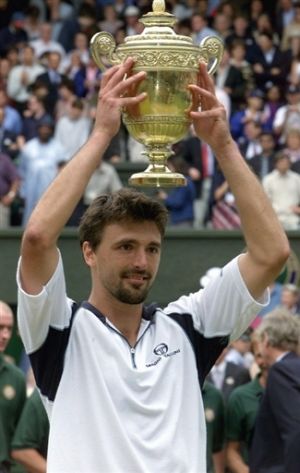
ATLETI DI CUORE : Goran Ivanišević


Goran Ivanišević (Spalato, 13 settembre 1971)Tennista croato. Ricordato per il suo carattere irrequieto e per il suo servizio, colpo nel quale è stato il migliore del circuito in sei stagioni (1992, 1994, 1996, 1997, 1998, 2001) raggiungendo il picco nel 1996 con 1477 ace, in carriera ha raggiunto la sua migliore posizione come numero 2 del mondo, dietro solo Pete Sampras, nel 1994. In carriera ha vinto 22 tornei di singolare perdendo altre 27 volte in finale. Ivanišević passò al professionismo nel marzo del 1988, dopo essere stato numero tre del mondo a livello juniores. In aprile partecipò al challenger di Graz dove venne eliminato ai quarti, a giugno partecipò per la prima volta a Wimbledon ma trovò subito l'Israeliano numero 22 del mondo Amon Mansdorf che lo sconfisse in quattro set. Il 1992 cominciò con il successo ad Adelaide, terza vittoria in carriera, sconfiggendo in finale in tre set lo svedese Christian Bergstrom. Attraversò poi un periodo costellato di problemi fisici che lo portò a saltare gli Australian Open ed disputare soltanto 10 match in quattro mesi, perdendone la metà. Tornò a grande livello a Roma quando conquistò la seconda finale stagionale battendo in semifinale Sampras, ma qui venne nuovamente sconfitto, stavolta da Courier. Cominciarono poi una serie di anni costellati da gioie e delusioni.  Con il 1999 cominciarono i problemi al tendine alla spalla. Il croato decise di non operarsi, scelta che lo fece sprofondare in classifica. Nei primi mesi di quella stagione subì numerose sconfitte al primo e secondo turno e ottenne come miglior risultati i quarti di finale di Doha, Scottsdale e Queen's. A Wimbledon fu eliminato al quarto turno, risultato che gli costò tredici posizioni in termini di classifica. Nel 2001 tornò, dopo 10 anni, a disputare un torneo di livello Challenger ad Heilbronn per ritrovare punti e condizione e a luglio la sua classifica (125ª posizione) non gli consente di partecipare al torneo di Wimbledon, ma gli organizzatori gli assegnano una wild card. Dopo aver perso al primo turno al Queen's la settimana precedente da Cristiano Caratti il suo destino sembrava fosse solo quello di una comparsata, tanto da essere quotato anche 150-1, ma Ivanisevic si rese protagonista di un torneo che resterà nella storia del tennis sia dal punto di vista emotivo dopo le tre finali perse negli anni precedenti, sia dal punto di vista statistico diventando il primo tennista a vincere un torneo dello Slam con una wild card.  Il tennista croato, dal secondo turno in poi, eliminò una serie di avversari tutti entro i primi 40 della classifica, tra cui due top ten. Nell'ordine caddero sotto i suoi ace Moya (testa di serie n.20), Andy Roddick (numero 30 del mondo), Greg Rusedski (numero 40 del mondo), Marat Safin (testa di serie n.4), Tim Henman (testa di serie n.6) e in finale, 9-7 al quinto, Patrick Rafter (testa di serie n.3). Questo successo gli permise di scalare ben novanta posizioni fino alla 16ª. Al suo ritorno a Spalato il giocatore fu acclamato da 150.000 persone.   Anche se inattivo dall'anno precedente, fu incluso nella squadra che affrontò e sconfisse la Slovacchia nella finale della Coppa Davis 2005. Goran non scese in campo ma ricevette ugualmente la medaglia e il suo nome fu incluso nell'albo d'oro accanto a quelli di Mario Ančić, Ivo Karlović, Ivan Ljubičić e il capitano Nikola Pilić. Dal 2005 partecipa all'ATP Champions Tour, il circuito delle ex glorie del tennis, in cui ha conquistato nove tornei.

Goran Ivanisevic (Split, September 13, 1971) Croatian tennis player. Remembered for his restless nature and his service, which was shot in the best circuit in six seasons (1992, 1994, 1996, 1997, 1998, 2001) reaching a peak in 1996 with 1477 aces in your career has reached his best position as number 2 in the world, behind only Pete Sampras in 1994. During his career he won 22 singles tournaments losing another 27 times in the final. Ivanišević went professional in March 1988, after being number three in the world juniors. In April he participated in the challenger of Graz, where he was eliminated in the quarter, in June, he participated for the first time at Wimbledon, but soon found the Israeli number 22 in the world Amon Mansdorf who defeated him in the September 4 The year 1992 began with the success in Adelaide, the third career victory, defeating in the final in three sets Swede Christian Bergstrom. Then went through a period full of physical problems that led him to skip the Australian Open and play in just 10 matches in four months, losing half. He returned to Rome when he won big at the second season finale by beating Sampras in the semifinals, but here he was again defeated, this time by Courier. Then began a series of years punctuated by joys and disappointments. 1999 began with the problems of the tendon in the shoulder. The Croatian decided not to undergo surgery, a choice that made him sink in the standings. In the early months of that season suffered numerous defeats in the first and second round and got better results as the quarter-finals in Doha, Scottsdale and Queen's. At Wimbledon he was eliminated in the fourth round, a result that cost him thirteen positions in terms of ranking. In 2001 he returned, after 10 years, to a tournament-level Challenger in Heilbronn to find points and condition and in July his ranking (125th place) does not allow him to participate in the Wimbledon tournament, but organizers assign him a wild card. After losing the first round at Queen's the week before by Cristiano Caratti his fate seemed to be only an appearance, too much to be quoted 150-1, but Ivanisevic became involved in a tournament that will go down in tennis history by both the emotionally after he lost three finals in previous years, both from a statistical viewpoint, becoming the first player to win a Grand Slam with a wild card. The Croatian tennis player, from the second round onwards, eliminated a number of opponents within the first 40 of every rank, including two top ten. Order fell under his ace Moya (seeded No.20), Andy Roddick (No. 30 of the world), Greg Rusedski (number 40 in the world), Marat Safin (seeded No. 4), Tim Henman ( seeded No. 6) and in the final, 9-7 in the fifth, Patrick Rafter (seeded No. 3). This success enabled him to climb ninety positions to 16 th. On his return to Split the player was cheered by 150,000 people. Although inactive from the previous year, was included in the squad who faced and defeated Slovakia in Davis Cup Final 2005. Goran did not go down the pitch but also received the medal and his name was included in the gold along with those of Mario Ancic, Ivo Karlovic, Ivan Ljubicic and captain Nikola Pilic. Participates in the ATP Champions Tour since 2005, the former glories of the circuit court, where he won nine tournaments.